Willingness to Look Stupid Is a Genuine Moat in Creative Work
sharif.io
Looking foolish is underrated.
Highlights & Annotations
When you are famous it is hard to work on small problems. This is what did Shannon in. After information theory, what do you do for an encore? The great scientists often make this error. They fail to continue to plant the little acorns from which the mighty oak trees grow. They try to get the big thing right off. And that isn’t the way things go. So that is another reason why you find that when you get early recognition it seems to sterilize you. In fact I will give you my favorite quotation of many years. The Institute for Advanced Study in Princeton, in my opinion, has ruined more good scientists than any institution has created, judged by what they did before they came and judged by what they did after. Not that they weren’t good afterwards, but they were superb before they got there and were only good afterwards.
Ref. A5BC-A
Before the Nobel Prize, nobody really cares who you are. But after the Nobel Prize, you’re a Nobel Prize winner, and Nobel Prize winners are supposed to have Good Ideas. Every idea, every paper, every talk at a conference is now being evaluated against the standard of your Nobel Prize-winning work. Everyone is asking, “is this worthy of a Nobel laureate?” It’s a high bar to clear. So instead of trying and occasionally failing, they just… stop trying. The fear of making something bad is worse than producing nothing at all.¹
Ref. 7D15-B
This sounds silly, but I think it captures the entire creative process well. You start by coming up with bad ideas. You will probably look stupid. That’s inevitable. But once you’re comfortable looking stupid, you can produce the bad ideas which will eventually lead to the good ones. If you don’t have the courage to look stupid, you’ll never reap the reward of having good ideas.
Ref. 39AA-D
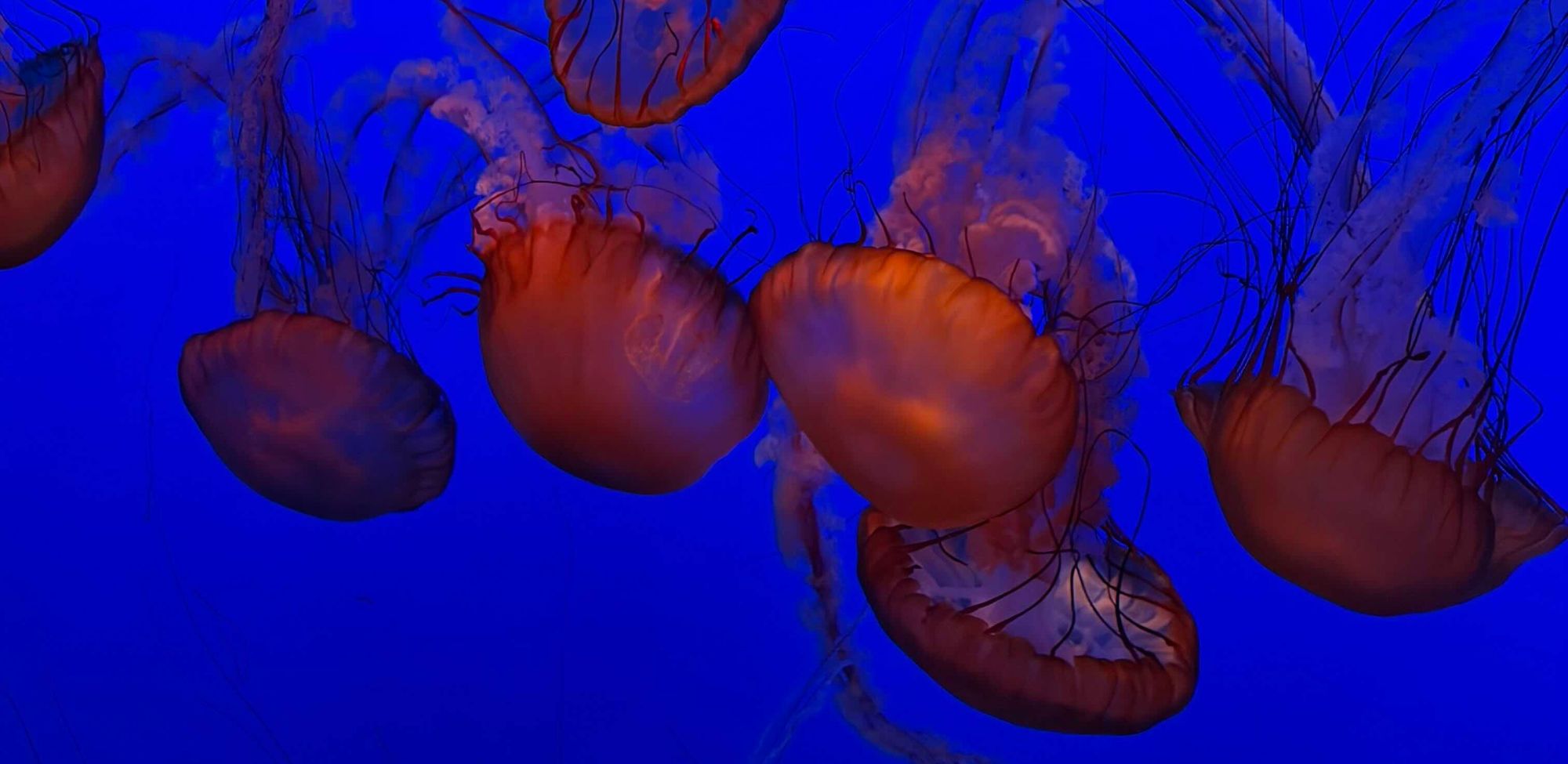
But how was evolution able to get to the jellyfish? The evolutionary process is pretty simple: generate a ton of random mutations and then let natural selection filter them. The overwhelming majority of mutations end up being harmful or neutral. An exceedingly small fraction are beneficial. If you could somehow give evolution a sense of embarrassment, so if every time it produced a fish with no fins or a bird with no wings, it felt a deep sense of shame and promised to be more careful next time – evolution would no longer work. It needs to be able to explore the fitness landscape with bad traits in order to produce good traits, and this exploration requires a willingness to produce unfit organisms. The only way evolution could get to the jellyfish was by being willing to produce the countless jellyfish-adjacent organisms which went extinct.
Ref. EDB1-E
modes here, each at an opposite end of the spectrum:
Ref. 6CD1-G
So where do we go from here? I think the answer is actually in that Whole Foods story. Aadil’s implicit goal was to “think of something clever to write on this cake” but none of us could do it because cleverness was the standard and none of our ideas met it. But when Aadil said “Let’s just say a bunch of bad ideas,” he changed the frame entirely. We were now playing a game where the only way to lose was by saying nothing at all.
Ref. FC93-H
I keep thinking about the version of me from a few years ago. He was worse at almost everything. Worse writer, worse thinker, worse at making things. Nobody really knew him and nobody really cared what he had to say. And yet he had so much more courage. He’d write something in an afternoon and publish it that evening and go to bed feeling good about himself. He wasn’t performing for anyone. He was just a guy with a blog, putting his thoughts out into the world, mostly for himself. I miss that guy.
Ref. 33CA-I